Cape Town vigil mourns children lost to unsafe play spaces
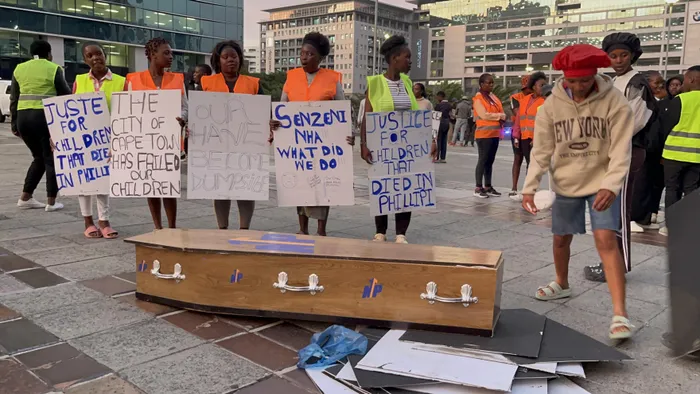
Alizwa Qwaqwa, Owethu Nqabeni, Emihle Ndesi, Amandla Madolo, Eutie Madolo, and Sinobomi Mhani, all from Khayelitsha.
Image: Fouzia van der Fort
Movement for Collective Action and Racial Equity (CARE) coordinator Nkosikhona Swartbooi said apartheid laws may be gone, but they still exist in Cape Town.
He addressed a crowd of residents during a vigil for children who had died whilst playing in unsafe spaces in their communities at Cape Town civic centre on Thursday, November 27.
The vigil will mourn children tragically lost due to a lack of safe play spaces, and the thousands killed by violent crime in Cape Town in recent years.
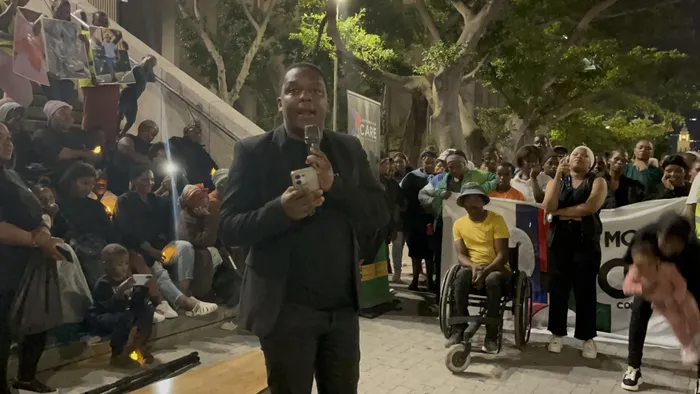
Movement for Movement for Collective Action and Racial Equity (CARE) coordinator, Nkosikhona Swaartbooi.
Image: Fouzia van der Fort
They claim that they have tried to engage with the City of Cape Town, but children were still dying and nothing was being done to help their families.
"Cape Town is an apartheid city. It can't be that a park in Camps Bay or a park in Vredehoek is different from a park in Hanover Park, Mitchell's Plain, Khayelitsha, or Philippi, governed by the same government. We demand that all parks must be built the same way, and that cannot happen without a policy," he said.
He also said that parks in the townships and the Cape Flats were serving more children than those in the suburbs.
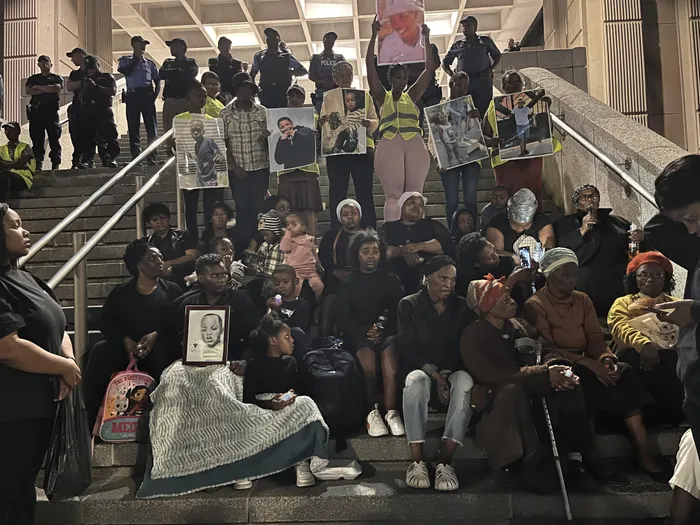
Family of children who had died while playing in unsafe spaces in townships and on the Cape Flats.
Image: Fouzia van der Fort
The social movement and civil society organisation demanded norms, standards, and guidelines to govern the development and maintenance of play parks; establishing a child-to-park ratio for all areas in the City, particularly in townships; prioritising the maintenance and cleaning of parks in townships; developing inclusive and accessible parks specifically designed for children living with disabilities; and a comprehensive plan, with a budget and timeline, for communities currently without play parks.
The vigil included families' testimonies and a collective call to the City of Cape Town to prioritise children's safety in black and coloured communities.
They brought a coffin and children's shoes representing the lives that were cut short because of violence and unsafe spaces.
This event is part of the Movement's #RightToPlay campaign, demanding urgent, equitable investment in safe and accessible play and recreational spaces for children across Cape Town.
The vigil will remember children like two-year-old Imthande Swartbooi, who drowned in an uncovered manhole, and Lihle Dyamdeki, 11, and Lusindo Dyamdeki, 7, who died from touching a live wire.
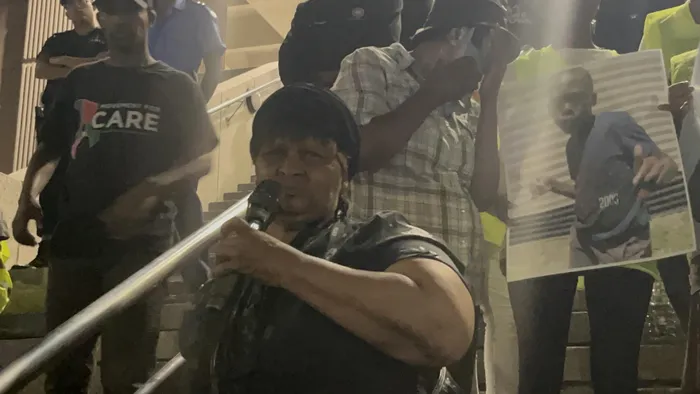
Lena Jumat, from Klipfontein Mission Station Philippi, speaks about her grandson Storm Scholtz who was electrocuted in 2011.
Image: Fouzia van der Fort
Lena Jumat, from Klipfontein Mission Station, Philippi, spoke about her grandson Storm Scholtz, 12, who was electrocuted on September 25, 2011. He was playing in water, and live cables were running through it.
"It is heartsore that he had to die like this," she said. He was one of four children who were electrocuted.
Ms Jumat said not only are they fighting for safe play spaces, but also basic services, like water, toilets, and electricity, which is why they have to use illegal connections.
"Our children's lives are in danger," she said.
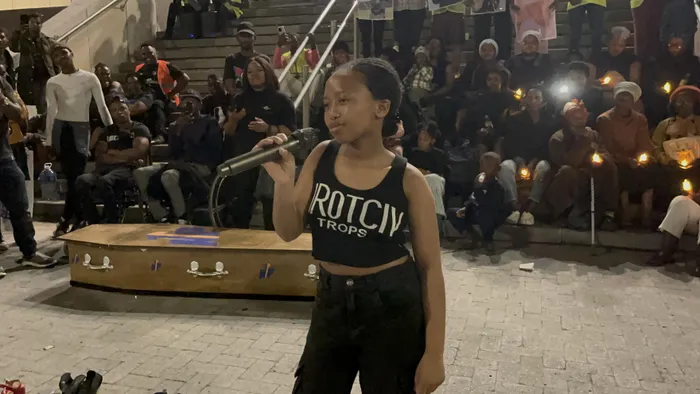
Lesego Nooi, 15, from Nyanga, speaks about there being no play equipment and clean spaces for children to play sport, in the township
Image: Fouzia van der Fort
Teenager Lesego Nooi, from Nyanga New Cross Roads, said that compared to parks in the city, outside of their community, which were clean and had play equipment, their parks were dumping sites.
"There is no slide or a space to play sports. Cars just drive past without hooting or alerting the children of them coming," she said.
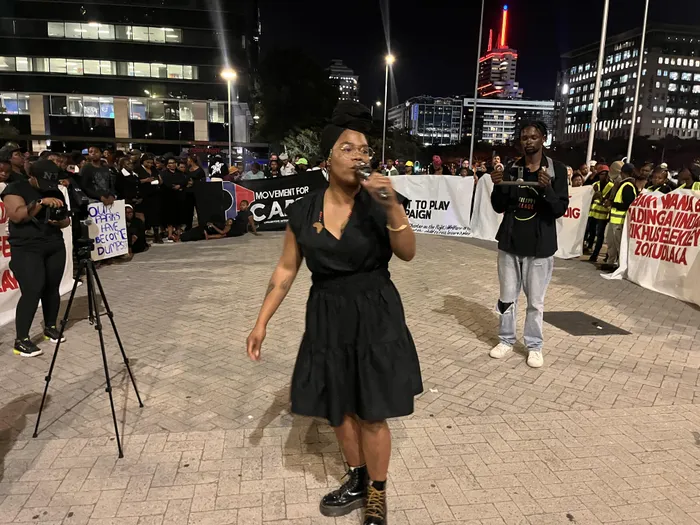
Activist Bronwyn February, from Manenberg, said communities should stand together to demand safe play spaces for their children.
Image: Fouzia van der Fort
Activist Bronwyn February, from Manenberg, said no matter whether residents came from the Cape Flats or the townships, children were dying.
"They are supposed to have the freedom to play. Our reality is that our kids cannot for a second, a minute, or an hour freely outside without the fear of being shot while playing," she said.
Ms February said that if parents and residents did not take a stand, then they were telling their children, "You don't have the right to be a child".
"It is by time that we take action in our community because we cannot have their blood on our hands," she said.
The only way to get resources would be for community members to stand together.
"We need to reclaim our streets. We need to reclaim our parks. Our parks are not meant to be a dumping site. Where people are selling and hiding their drugs," she said.