Reviving fez-making: Preserving Cape Muslim heritage
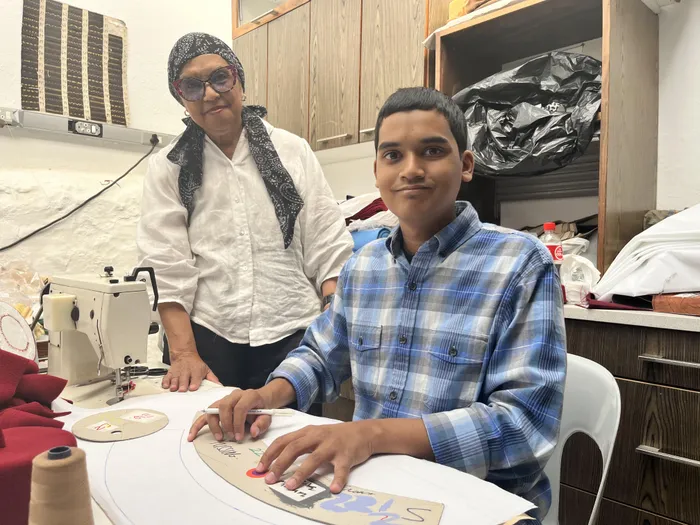
Boorhanol kufiyah, fez-making project manager Shaheeda Essop, and Husain Galant, from Walmer Estate, who will be continuing this vital piece of Cape Muslim heritage.
Image: Fouzia van der Fort
The kufiyah, fez, a vital piece of Cape Muslim heritage, will continue to be made at the Bo-Kaap Cultural Hub, marking a new chapter in preserving traditions.
Community-based organisation (CBO), The Boorhaanol Islam Movement, launched its kufiyah (fez)-making project at the hub on Saturday, January 24.
According to Abdul Muhaimin Bassier, chairman of the movement and project coordinator, the kufiyah is more than just a hat.
"It is a long-standing symbol of respectability, learning, and communal identity within the Cape Muslim community," he said.
He said that the specialised skills required to handcraft authentic fezzes were steadily declining, placing this unique craft at risk of extinction.
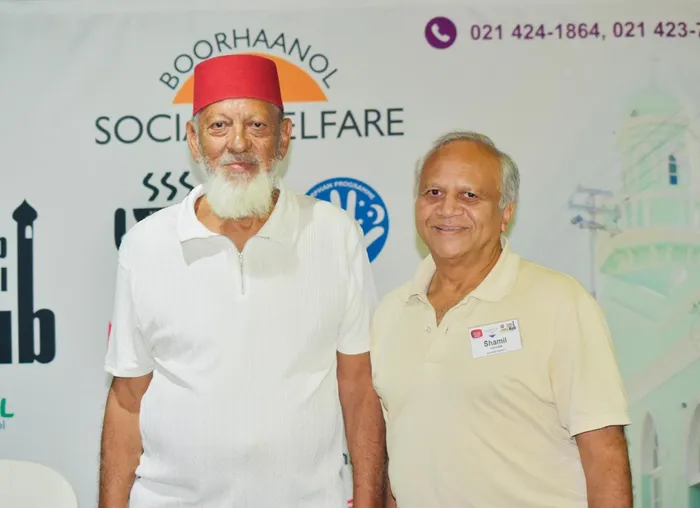
Veteran kufiyah craftsman Boeta Gosain Samsodien, and Shamil Jassiem, son of Sheikh Tape Jassiem, who was also a fez maker.
Image: Supplied
Boeta Goosain Samsodien, a veteran fez craftsman from Sandvlei, and one of the last in the country, approached Boorhaanol to continue the skill.
The CBO said it recognised the profound historical and cultural significance of this proposition, and has acquired the necessary equipment and committed to training staff in the meticulous, decades-old process.
"The initiative is a purposefully driven decision to safeguard a living heritage, to honour the legacy of master artisans, and to create a platform where skills, values and dignity of work are passed on meaningfully," said Mr Bassier.
Mr Samsodien's business was listed as the only fez-making manufacturer in South Africa, with the craft now only truly practised in two other countries worldwide - Morocco and Egypt.
Although age has prevented him from working for the past three years, Mr Samsodien was passionate about passing on his accumulated knowledge.
Mr Samsodien's son, Ameer, who is familiar with his father’s worldwide customer base, expressed the family’s confidence in the initiative.
“As a family, we feel confident that Boorhaanol will uphold the values of the craft,” he said.
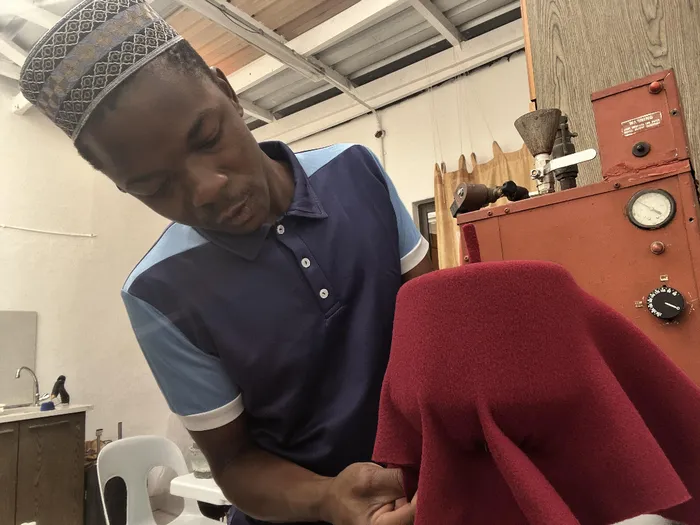
Abdul Bamusi, from Gugulethu, shapes the fez.
Image: Fouzia van der Fort
A tearful Mr Samsodien junior said his father has been working since the age of 13-years-old and that is all he knows. "Now that he has come to this age, I had to take the machines off him. I had to take the scissors off him. He still wants to work, and if he had the strength in him, he would still be manufacturing the fez today," he said.
He also paid tribute to the late Sheikh Tape Jassiem, a pioneer fez maker, who had brought the brass moulds with him to South Africa when he returned home from his studies in Egypt, at Al-Azhar.
Project manager Shaheeda Essop said another aim of the project was to restore the artisan economy by providing opportunities for skills development, mentorship, community participation, and fostering pride in local craftsmanship.
On Saturday, Mr Samsodien senior handed the reins over to Husain Galant, from Walmer Estate, who has been trained and is skilled to continue the kufiyah-making legacy.
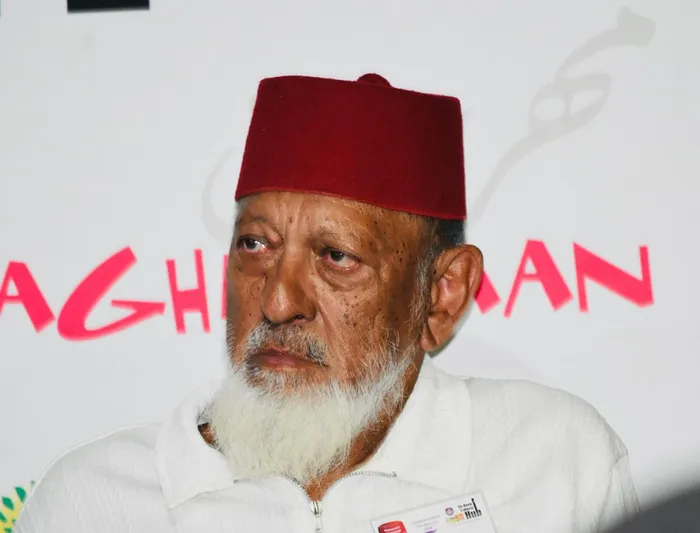
Boeta Gosain Samsodien, from Sandvlei in Macassar, is wearing a traditional red kufiyah.
Image: Supplied
Mr Galant, who had been working at the hub, said he jumped at the opportunity to learn a new skill when he heard about the project. I like learning new skills and working with my hands...creating things," he said.
Ms Essop said Mr Galant was a fast learner and meticulous in his work.
Ms Essop said that the movement was ensuring that this essential aspect of Cape Muslim culture remained active and relevant in contemporary society, rather than merely becoming a memory.